


Migration project Transgourmet Prodega
27. May 2021
From CELUM 4 without detours to CELUM 6 despite complex system landscape
More
by Veronika Altenbach
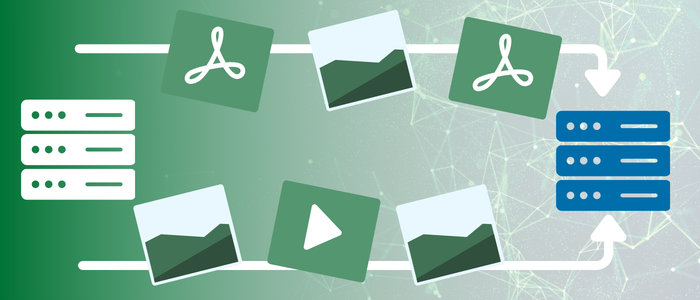
A DAM migration today is rarely just a technical system transfer.
What used to be understood as switching an image database for companies is now often part of a comprehensive transformation project.
Back in 2022, in our article «Prepare and Manage a DAM Migration», we described the operational steps of a migration – from pre-project planning and metadata mapping to proof of concept. This guide remains valid.
But the framework conditions have changed.
Today, it is no longer just about data migration. It is about structure, governance, integration, and long-term strategic viability.
In many companies, the existing media management system has grown organically over the years. New channels were added, international markets were entered, and marketing teams increasingly worked in a decentralized way.
At the same time, requirements increased:
Today, a DAM is no longer an isolated image repository. It is a central asset management platform that serves as a data hub for all media-related content. This includes in particular:
We often hear: «We’re switching systems, migrating the data – done.» That may sound simple at first. However, there is far more behind it than a copy-and-paste approach.
A common mistake in migration projects is to view the task purely from a technical perspective. In practice, a DAM migration is rarely an isolated initiative. It is usually part of a broader transformation in which the entire marketing system landscape is being restructured.
The implementation or retirement of a DAM system is typically accompanied by new marketing platforms, modified CMS structures, or a comprehensive redesign of the content management landscape.
As a result, the following elements change:
Our experience shows that anyone who plans a DAM migration purely from a technical standpoint is missing the bigger picture. Only in interaction with CMS, PIM, web-to-print, or marketing automation does it become clear what strategic role the DAM is expected to play in the future – and what requirements this creates for the data model, integrations, and governance.
In addition to the big picture we should keep in mind, we often find that many companies underestimate the condition of their existing data inventory.
In an organically grown image database for companies, you will often find:
A migration offers the opportunity to clean up structurally.
Not every asset needs to be carried over.
Not every legacy structure deserves to be preserved.
Those who carry out a thorough cleanup before migration reduce:
The foundation of every DAM system is its metadata model. That is why we do not recommend a simple 1:1 mapping from the old to the new media management system.
Instead, the following questions should be addressed:
A well-designed metadata concept determines whether the new system will truly function in daily operations – or whether it will remain merely a more modern interface built on outdated structures.

Michael Degiapietro
Head of Content Management
We support you in analyzing, structuring, and developing a sustainable metadata concept – practical, system-independent, and aligned with your future content architecture.
Book an appointmentAn iterative approach has proven effective, especially in larger content management migration projects.
Instead of switching everything at once, the following approach is recommended:
This approach significantly reduces risks and builds trust within the project. A migration is not a sprint, but a controlled transformation process.
A DAM affects far more than just IT or marketing.
Product management, content creation, translation, e-commerce, brand management – all of them work with assets in different ways.
Especially in the context of a marketing software system change project, it is crucial to involve these perspectives early on.
This increases:
Technically flawless systems rarely fail because of the technology – but rather due to a lack of alignment.
As complex as a migration may seem, it offers a unique opportunity:
Many companies only realize during the migration process how much their existing media management system has grown – and how much potential lies in a structured realignment.
We analyze your existing structure, refine your metadata model, and develop a sustainable target architecture – system-independent and aligned with your future marketing landscape.
From CELUM 4 without detours to CELUM 6 despite complex system landscape
More
Are you about to embark on a DAM migration or are you planning one? We have best practices for you on how best to proceed.
More